


Consider an illustrative service business with two salespeople and several promising proposals. The founder spends three weeks on a major delivery problem. Prospects still attend meetings, but proposals wait for pricing decisions, follow-ups lose momentum, and two expected contracts move into the next month.
When founder dependency in business determines whether deals move forward, the revenue forecast depends on one person’s availability. Fractional CFO services can help leadership assess how delays affect expected revenue, customer receipts, and the cash needed to build independent sales capacity.
If the founder stepped away from routine selling next month, which opportunities would still progress? Look separately at who generates qualified leads, who can close them, and whether the steps between those points are clear enough for someone else to follow.
Where Founder Dependency in Business Shows Up
Start with recent opportunities. For each one, identify what the founder contributed. Perhaps they introduced the prospect, clarified the offer, approved a discount, or reassured the buyer that the company could deliver.
Those are different dependencies. A salesperson waiting for a price decision needs a different solution from one who cannot explain the service without help.
Look at deals that stalled as well as those that closed. If every successful proposal involved the founder, that alone does not establish that the team could never close independently. The founder may have been assigned the strongest opportunities. Compare similar work and record where intervention became necessary.
For finance, the immediate concern is whether the sales forecast depends on more founder involvement than their calendar can support.
Can the Sales Team Close Without the Founder?
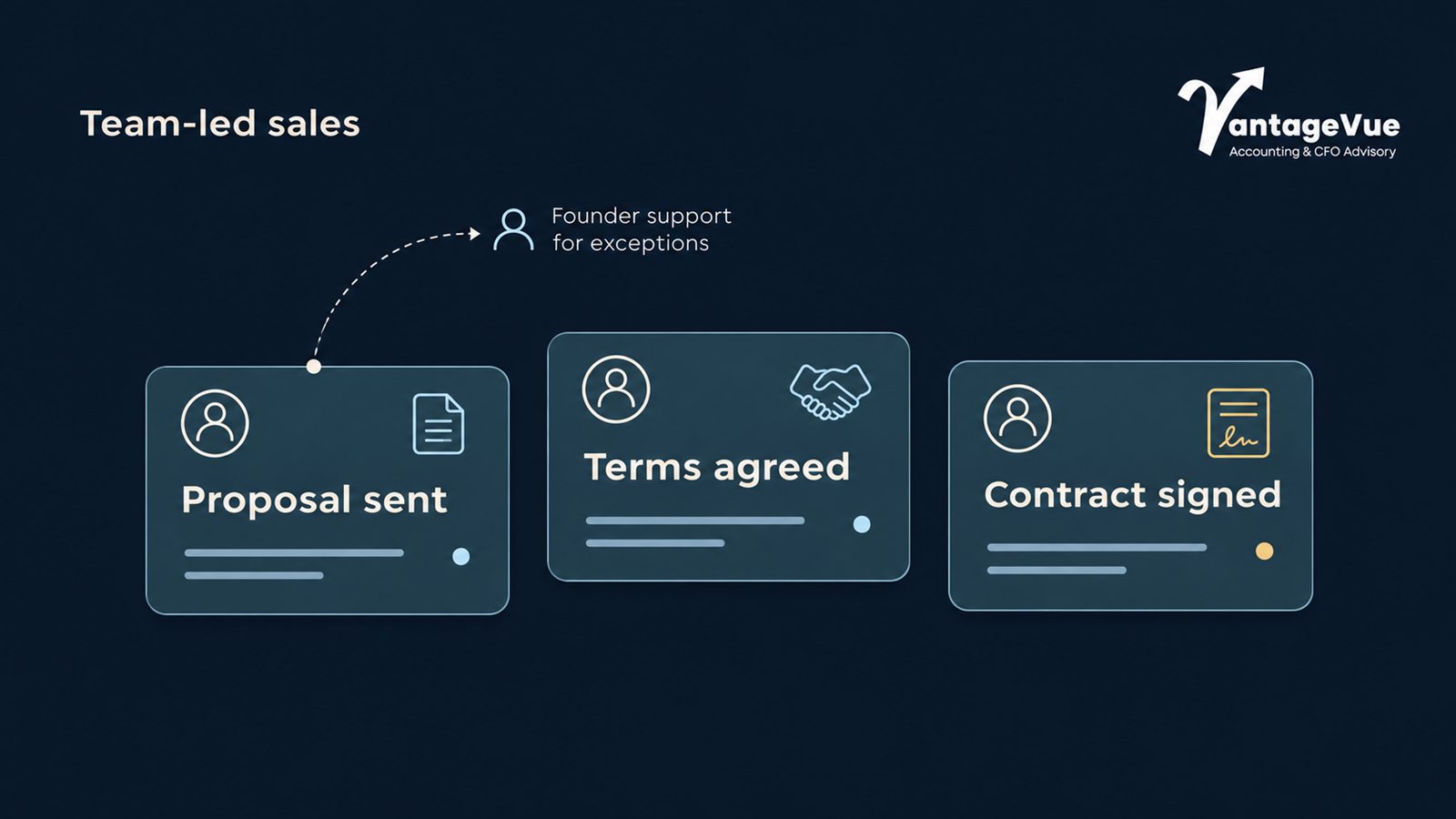
The two salespeople in the opening example may understand the service and handle discovery well. Yet if buyers believe that only the founder can confirm scope, every proposal eventually returns to the same desk.
Make the missing authority or information explicit. Salespeople need a clear account of what the company can deliver, which customer requirements it can accommodate, and when specialist input is necessary. Approved pricing guidance and examples of well-scoped proposals can help them respond without improvising.
Finance and delivery leaders should help establish the commercial boundaries. Define who can agree to discounts, extended payment terms, or changes in scope, and when a proposal needs review. A salesperson who wins work through concessions the business cannot support may fill the pipeline while weakening the economics.
VantageVue’s guide to a financial approval matrix provides a framework for documenting authority and escalation.
Transfer ownership in stages. A salesperson might lead the next meeting while the founder observes, then handle a comparable opportunity independently. Reserve founder involvement for defined situations, such as an unusual commitment or a strategically important relationship. Review the result before widening that responsibility.
The founder’s expertise remains available, while routine decisions have a clearer route.
Does the Pipeline Fill When the Founder Is Busy?
A team may become capable of closing and still depend entirely on the founder’s relationships for new opportunities.
Review where qualified opportunities originate. Distinguish founder introductions from referrals to the wider company, existing-account development, marketing, and outreach. Also distinguish who generated the opportunity from who ultimately closed it.
A large contact list says little about whether suitable prospects are entering active discussions. Agree what makes an opportunity qualified, including customer fit, a credible need, and an identifiable next step.
For the service business, this review might reveal that the salespeople manage conversations well but receive few new opportunities whenever the founder stops networking. Adding another closer would leave that constraint unresolved.
Put ownership against the activities needed to maintain the pipeline. Forecast their cost and allow time to assess results before assuming they will support another permanent hire.
Build a Sales Process Someone Else Can Follow
A repeatable process should help the team understand what must happen before an opportunity advances.
Document the information needed to qualify a prospect, prepare a proposal, confirm delivery capacity, and agree on commercial terms. Each active opportunity should have an owner, a next action, and a reason for its expected close date.
Reducing founder dependency in business also requires capturing judgment. What makes the founder decline an attractive-looking project? Which requests tend to create rework? What evidence makes a proposed closing date credible?
Use recent deals to make those answers concrete. A short discussion of a real proposal can reveal more useful guidance than a long sales manual.
Keep the handoff to delivery and finance visible. Scope, pricing, billing milestones, and payment terms should survive the move from proposal to contract. Otherwise, a successful sales handoff can create delivery or collection problems elsewhere.
Budget for the Transition Before Hiring
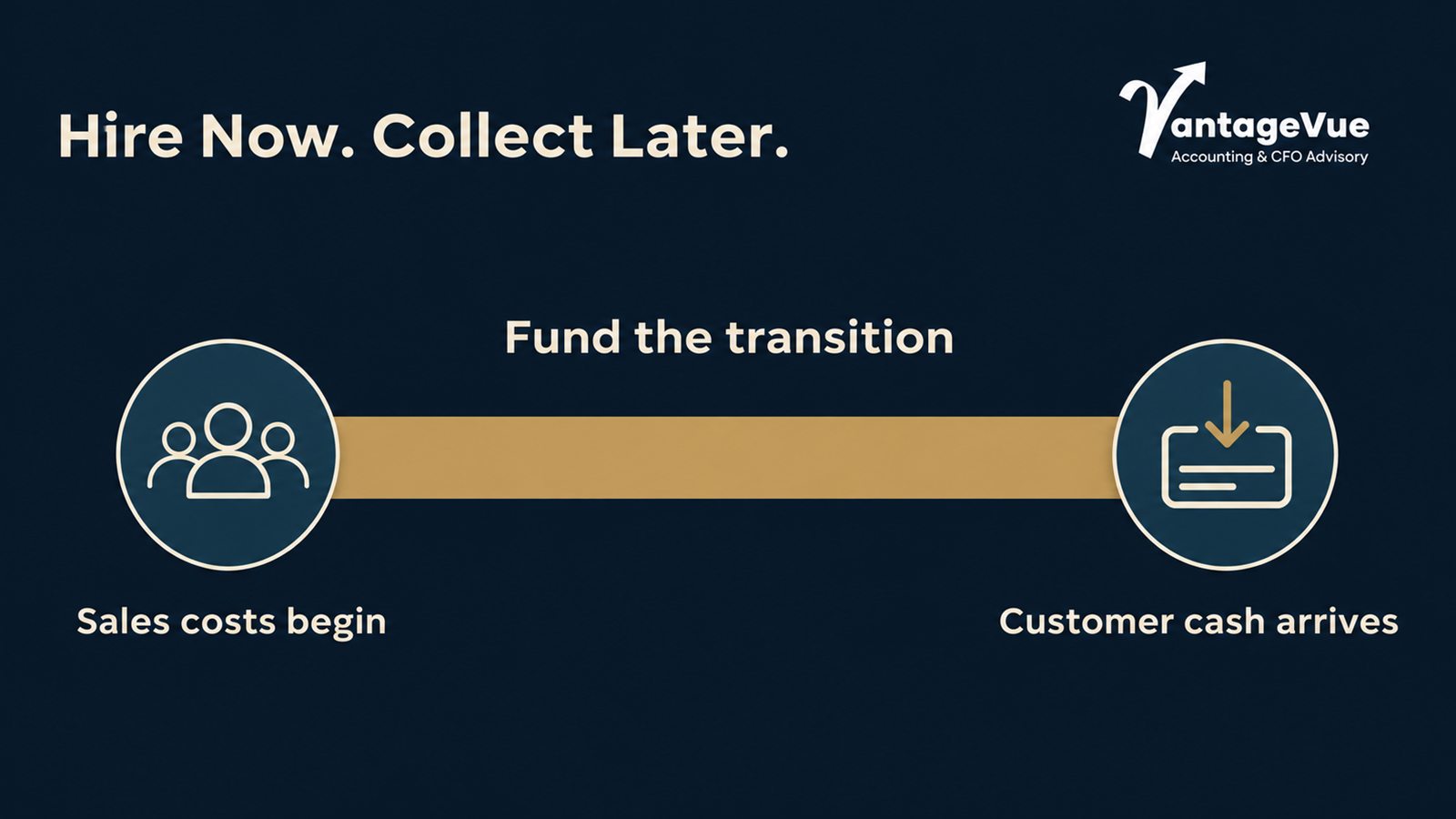
The financial cost of founder dependency in business includes the investment needed to change it. Recruitment, compensation, training, marketing support, and management time can arrive before additional customer receipts.
Suppose the same illustrative business considers adding a salesperson and supporting activity at a total recurring cost of $12,000 a month. If additional work produces a 40% contribution margin after all variable costs associated with that work, but before the $12,000 being evaluated, the company needs $30,000 in additional monthly revenue to cover that cost:
$30,000 × 40% = $12,000.
At that level, the additional contribution covers the $12,000 monthly cost; it does not yet recover recruitment costs or losses during ramp-up. Include commissions and other variable selling costs in the margin unless they are already included in the $12,000. Count each cost once, and check whether higher sales would require another step up in delivery capacity.
The cash forecast needs those omitted items. Model when the employee starts, when suitable opportunities may close, when the work can be delivered and invoiced, and when customers are expected to pay. Signed contract value is not automatically current-period revenue or immediately available cash.
VantageVue’s article on why every company needs a financial model explains how forecasts support decisions involving changing costs, timing, and business assumptions.
Test a slower transition as well. If sales take longer to develop, leadership should know how long the business can fund the plan and which commitments can be staged.
Measure Whether Responsibility Is Actually Moving
Choose a small set of measures that shows whether the team is becoming more capable:
- Founder involvement: What share of comparable opportunities required intervention, and why?
- Independent sales results: How did comparable team-led opportunities convert, and how long did they take?
- Pipeline replenishment: Are qualified opportunities arriving through activities the wider team owns?
- Commercial quality: Are new contracts meeting margin expectations without unusual discounts or delivery promises?
Review these alongside bookings, recognized revenue, and collections. A team can improve its closing rate while accepting work that contributes too little or takes too long to pay. Use a consistent review period and enough comparable opportunities to avoid drawing conclusions from one unusually large win.
VantageVue’s article on KPI dashboards that support leadership decisions explains how to connect a focused set of measures with management action.
Progress may initially mean that the founder joins fewer routine meetings rather than total sales increasing. Record that change, then examine whether it creates useful capacity and whether commercial results remain acceptable.
Give Growth a More Reliable Foundation
Reducing founder dependency in business takes a planned transfer of knowledge, authority, and customer confidence. It also requires enough financial capacity to support the transition while the team develops.
Return to the proposals that stalled in the opening example. If routine pricing questions can now be resolved, qualified leads continue arriving, and the team can agree workable terms, the business has evidence that responsibility is moving. Use those results to update the forecast before making the next hiring or spending commitment.
VantageVue’s fractional CFO services help growing businesses connect revenue forecasts, cash planning, and performance measures with decisions about hiring and growth. This support can help leadership assess the cost of building independent sales capacity and monitor the financial results during the transition.
To discuss the financial planning behind your next stage of growth, contact VantageVue: