


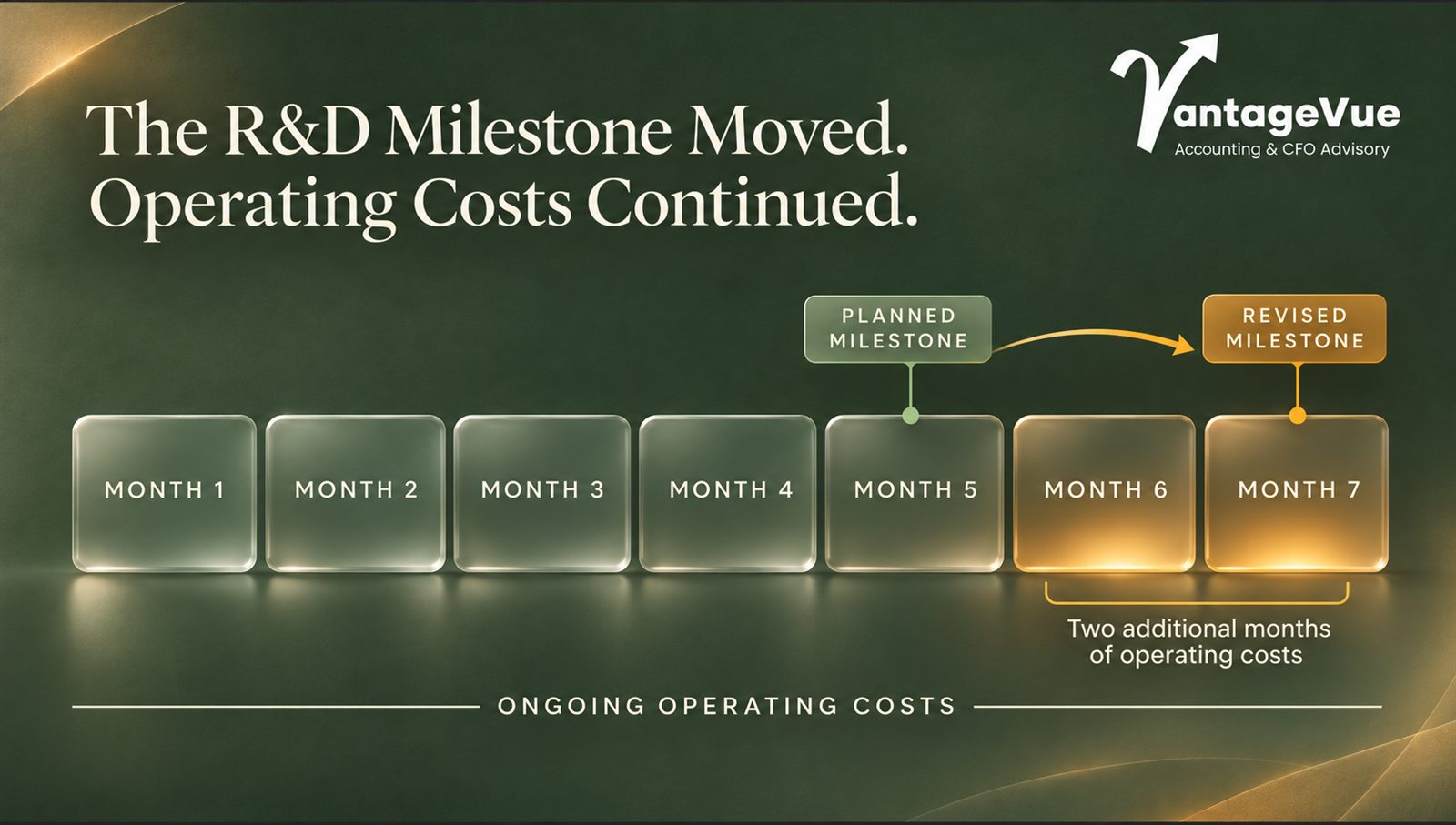
The research team tells the founder that the study results will arrive two months later than planned, at the end of Month 7. The next investor discussion was supposed to happen after those results. Payroll is still due, and the lab has already scheduled work for next month.
That is where cash runway planning comes in. The first question is how much cash the company will have when the results arrive. The second is whether that cash will last long enough for leadership to act on them. A delayed milestone can change both answers, even when the date the company expects to run out of cash stays the same.
Cash Runway Planning Starts With Two Dates
Consider an illustrative life sciences company with $1.2 million in available cash and a net cash burn of $150,000 a month. In this example, net burn is the amount cash falls each month from operations after any operating receipts. Assume that cash burn stays constant, the company receives no new financing, and there are no other cash movements. On those assumptions, the company reaches zero cash at the end of Month 8.
| What leadership needs to know | Original plan | Delayed readout |
|---|---|---|
| Study results (readout) | End of Month 5 | End of Month 7 |
| Projected cash at readout | $450,000 | $150,000 |
| Time from readout to zero cash | 3 months | 1 month |
| Projected cash-out date | End of Month 8 | End of Month 8 |
The company will have used $300,000 more cash by the time the results arrive. That covers two more months of normal operations while the team waits. The study cost is unchanged in this example. Leadership now has one month before cash runs out, and less time to act if it needs to preserve cash for payroll or other commitments.
VantageVue’s guide to cash runway math explains how to calculate burn and test scenarios. For this example, the key is to put the readout and projected cash balance on the same calendar.
Check Which Payments Actually Move
The flat burn assumption isolates the effect of the delay. To update a real forecast, sit down with the program lead and review the payment dates one by one.
- Payments that stay put. Payroll, rent, and scheduled vendor installments may still fall due on their original dates. Check the agreement and invoice schedule before moving anything in the forecast.
- Payments that move with the work. If a lab payment is due after delivery of a specific report, confirm the revised delivery date and the payment terms. Moving the payment can help with near-term cash, but it still belongs to the forecast.
- Costs the delay adds. Ask whether the new schedule requires more sample storage, another round of testing, or extended support from a research partner. Add each confirmed or estimated cost in the period it is expected to be paid.
This is where cash runway planning benefits from input beyond finance. The program lead knows what work has changed. Finance can translate that into payment dates and show whether the new plan changes the projected cash-out date as well as the cash left at the milestone. VantageVue’s article on why companies need a financial model explains how changing operating assumptions can be reflected in the same model.
Work Back From When Funding Could Arrive
Suppose the company expects to receive new funding at the end of Month 9, after investors have had time to review the data. That date is an assumption. The company would have $150,000 at the end of Month 7 and need another $300,000 to cover operations through Month 9. If those payments fall due before the proceeds arrive, the company would be $150,000 short. If leadership also wants to maintain a $150,000 cash buffer, the amount to cover rises to $300,000 under the same assumptions.
The gap needs attention before Month 9. In this example, the forecast reaches the $150,000 buffer at the end of Month 7 and reaches zero at the end of Month 8 without intervention. Review near-term cash by week, or by payment date if balances are tight, to see when a commitment would first push cash below the buffer. Keep uncommitted proceeds out of the operating forecast used to make spending decisions and show them separately in a financing scenario.
Cash runway planning gives leadership a date to work back from. If the revised forecast shows the buffer being crossed in Month 8, set a decision date before then. At that review, compare what the company could save by deferring discretionary work with what it could realistically secure through earlier financing conversations. Check any proposed deferral with the research team so it does not jeopardize the readout that the financing plan depends on.
Give the Board a Decision to Make
In this example, the company reaches its $150,000 cash buffer at the end of Month 7. The founder should bring the revised forecast to the board before then, showing the original and revised readout dates, the cash expected at each, and the first payment expected to take cash below the buffer. Ask the board to agree on two actions: start investor outreach now, and decide which spending can wait if funding is still uncommitted by the agreed review date. The founder can lead the outreach, finance can confirm the review date from the payment schedule, and the program lead can flag any work that cannot be deferred without risking the readout. VantageVue’s guide to reporting that helps leadership make decisions offers a useful way to focus that discussion.
The most useful cash runway planning answers a question the founder can take back to the team: how long can we keep the program moving, and what needs to happen before that time runs out?
VantageVue’s fractional CFO services help leadership teams connect program schedules with spending forecasts, test financing scenarios, and prepare clear decisions for the board. If an R&D milestone has moved, get in touch with VantageVue to discuss what the change means for your cash plan.