


A research partner sends a revised budget. The next development milestone is likely to move back, but several vendor payments are still due as scheduled. At the next board meeting, the founder needs to explain how much cash the company will need, when it will need it, and which commitments can wait.
Bring that scenario into the interview. When choosing a fractional CFO for a life sciences company, ask the candidate how they would turn the revised budget into a decision the leadership team can make. Their response will help you judge whether their fractional CFO services fit the work you need done.
Start by asking for an example from a company at a similar stage: What decision did leadership face, what did you produce, and how did it help them decide? If the candidate can share a sample forecast or board report with confidential details removed, ask them to walk you through it. You want to understand which assumptions they challenged and how they explained the trade-offs.
Then use these five questions to see how they would approach your business.
1. How Would You Track R&D Spending Before the Invoices Arrive?
A monthly report tells you what has been recorded. When deciding whether to authorize the next phase of work, leadership also needs to know what the company has committed to spend and when payments are expected.
Give the candidate a specific example: a research partner has completed a phase of work, but the invoice has not arrived. How would that show up in the cash forecast? Who would verify the work and payment terms? Ask how they would bring together the program budget, vendor agreement, approved changes, and expected payment dates.
What a strong answer sounds like: “I’d review the agreement with the program lead to confirm what was approved, what work is complete, and when payment is expected. I’d include the anticipated payment in the cash forecast and flag the completed work for the accounting team to review during the close.”
2. What Would You Change in the Cash Forecast if a Milestone Slipped?
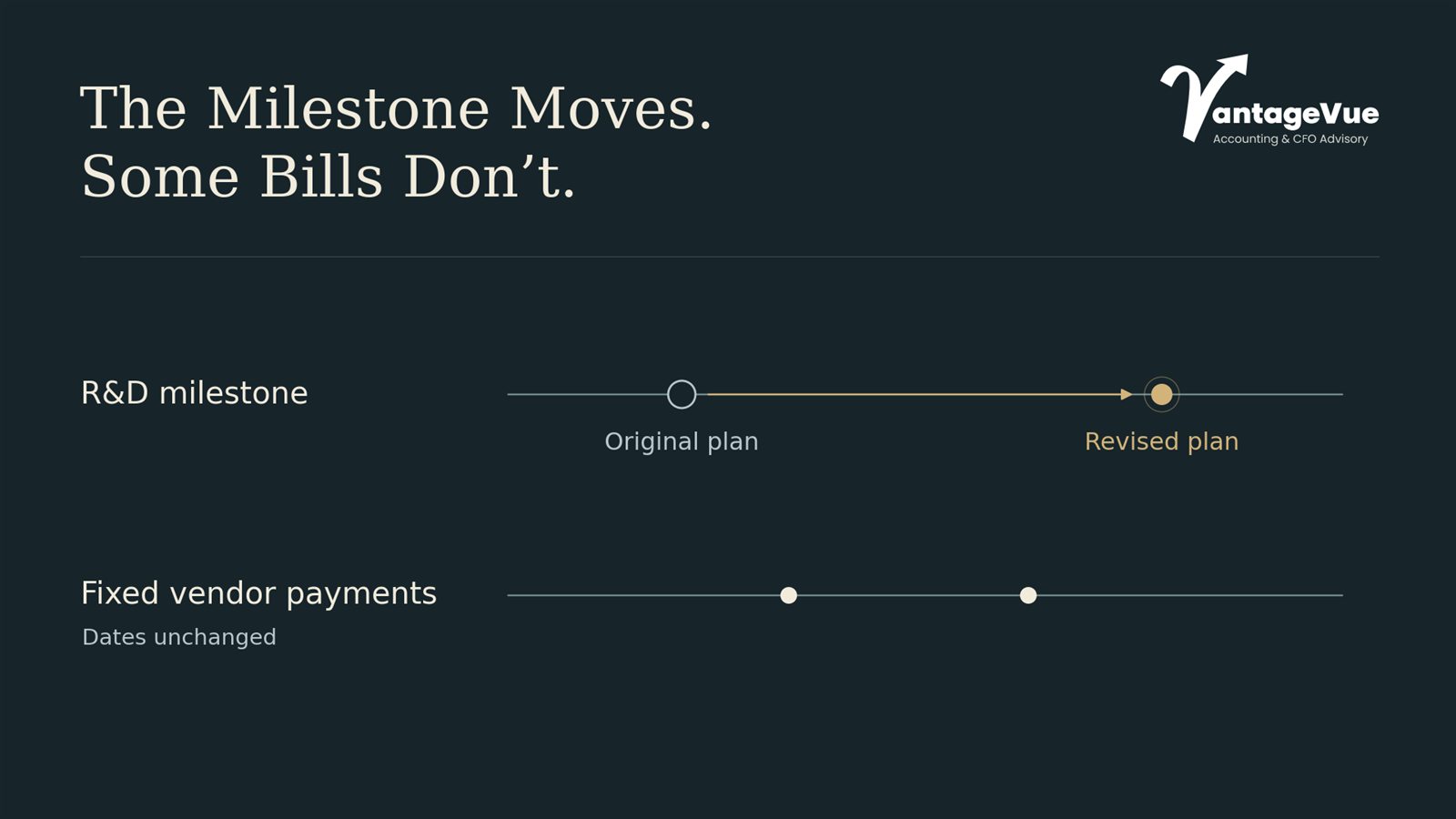
Tell the candidate that an important milestone has moved back by three months. Some vendor payments are tied to completion; others are due on fixed dates. The company also expects to seek funding after reaching the milestone.
A fractional CFO for a life sciences company should explain which assumptions they would revisit. Listen for how they distinguish costs that move with the milestone from commitments that continue, and how they would show the effect of later funding on cash runway.
What a strong answer sounds like: “I’d keep the original forecast and build a delayed case for comparison. I’d confirm which payments move, which stay put, and whether the funding timeline changes. Then I’d show when cash becomes tight in each case and which decisions leadership needs to make before then.”
VantageVue’s article on why every company needs a financial model explains how a model can help leadership test changing assumptions before committing to a plan.
3. What Would You Put in Our Monthly Leadership Report?
Ask the candidate to build the report around one decision: Should we approve the next phase of a program this month or wait?
A useful report could show available cash, actual and committed spending by program, upcoming payments, and changes to the forecast. Ask how the candidate would trace those figures back to the accounting records and explain differences between the budget and the latest outlook.
What a strong answer sounds like: “I’d show what changed since the last review and what it means for the decision. If program spending is below budget because the work slipped, I’d show when we now expect that spending to occur. That way, leadership can judge whether there’s enough cash to approve the next phase.”
For more on choosing measures that support decisions, see VantageVue’s guide to KPI dashboards for leadership.
4. What Would You Verify Before We Share Our Numbers With Investors?

Give the candidate a draft funding request and ask what they would check before it goes into an investor presentation. Ask the candidate to pick one number in the investor deck and show you where it came from. If the program budget changed last week, how would they make sure the deck still matches the forecast?
Listen for specifics. Can they trace the starting cash balance to the latest records? Does the proposed use of funds match the cost and timing of the work plan? If leadership has revised a milestone or approved new vendor spending, does the investor presentation reflect that change?
What a strong answer sounds like: “I’d reconcile the starting cash balance, check the major spending assumptions with program leads, and make sure the amount requested matches the work the company plans to fund. If we’re modeling an equity raise, I’d confirm we’re using current ownership records before sharing dilution scenarios.”
VantageVue’s guide to cap table hygiene before a fundraise covers the ownership records worth checking before that work begins.
5. What Would You Deliver in the First Month?
Ask the candidate to name one deliverable, who will own it, and when leadership will receive it. Give them the date of your next board meeting or spending decision so they can explain what they would prioritize and what they need from your team.
What a strong answer sounds like: “If the immediate decision is whether to approve the next research commitment, I’d own an updated cash forecast and deliver it by the end of the first month, or earlier if the decision requires it. It would include the current plan and a delayed-milestone scenario. I’d need the accounting team to confirm cash and upcoming payments, and the program lead to validate the revised work schedule.”
Before agreeing to the engagement, clarify who will handle the monthly close, who will maintain the forecast, and how the CFO will be available when an urgent decision comes up.
Choose the Advisor Who Makes the Next Decision Clearer
Before hiring a fractional CFO for a life sciences company, give each finalist the same scenario and compare their responses. Did they ask for the right information? Could they show how their analysis would change a decision? Did they explain what they would deliver and who would own it? Those answers will help you assess how the engagement would work when the next budget change lands.
VantageVue’s fractional CFO services help growing companies connect budgets, forecasts, and financial reporting to the decisions leadership needs to make. If you’re evaluating the finance support your life sciences company needs, contact VantageVue.