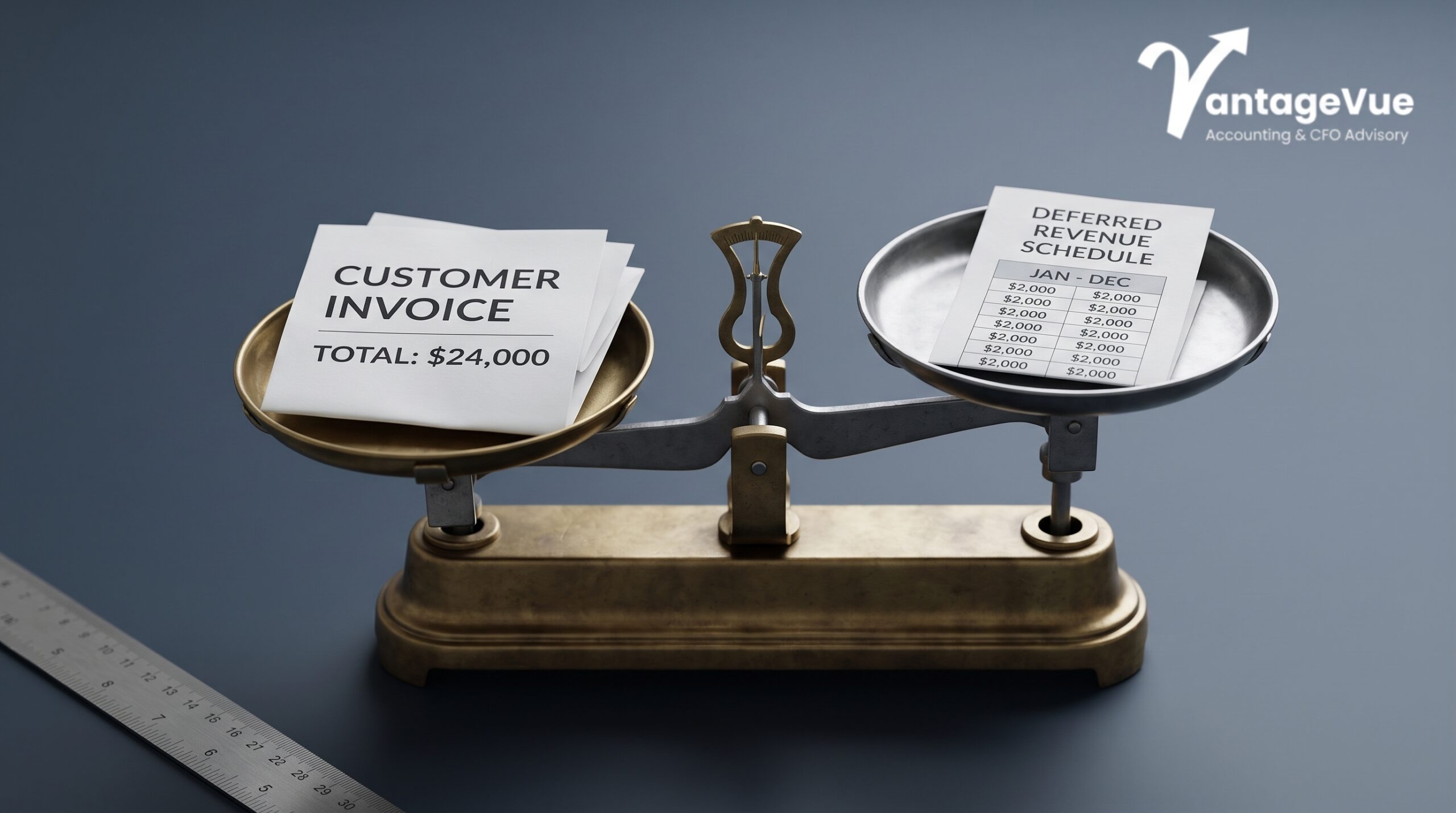
A customer signs a 12-month software subscription for $24,000. Billing sends the correct $24,000 invoice. The contract dates are in the system, and the customer may already have paid. At month-end, however, the deferred revenue report says one amount, and the general ledger says another.
The invoice can be accurate while the accounting trail is incomplete. One system knows what was billed; another holds the revenue schedule; the ledger records what was posted. If the three do not use the same contract terms and transaction history, finance cannot explain the balance simply by checking the invoice.
This is where SaaS deferred revenue reconciliation becomes a practical financial close task. Trace one agreement from its signed terms through billing, the revenue schedule, and the ledger. The differences you find will tell you whether the problem is a date, a missing transaction, a duplicate entry, or an accounting judgment that needs to be reviewed.
SaaS Deferred Revenue Reconciliation Starts with the Agreement
For this example, assume the subscription provides the same service from January 1 through December 31. The customer is invoiced $24,000 on January 1, and the company’s documented policy allocates $2,000 to each service month. There are no separate setup services, variable fees, discounts, taxes, or contract changes in this illustration.
Before opening the billing report, confirm the signed agreement and any order form. Record the customer and contract identifiers, service start and end dates, price, billing frequency, renewal terms, and any later amendment or credit. The accounting team should also confirm the performance obligations and revenue recognition method that apply to this agreement under the relevant reporting framework. A real contract may require a different treatment; the simple allocation here only makes the reconciliation visible.
The signed terms are the reference points. If the billing platform starts the term on February 1 while the agreement says January 1, a perfectly calculated schedule will still produce the wrong January result.
Follow the Invoice into the Billing Record
For SaaS deferred revenue reconciliation, the January invoice should identify the same customer, agreement, service period, and $24,000 price. Compare it with the billing system’s contract record and note any credit memo, cancellation, or reissued invoice.
Do not treat payment status as proof that revenue is correct. A customer can pay the invoice in full while much of the service is still to be delivered. Conversely, an unpaid invoice may still create a receivable if the right to payment is unconditional. The receivable, cash receipt, revenue, and remaining service obligation answer different questions.
VantageVue’s accrual accounting article explains the broader timing principle. The operational question here is narrower: did the invoice and every subsequent change reach the revenue schedule and ledger once, in the right period?
Compare the Schedule with the Ledger
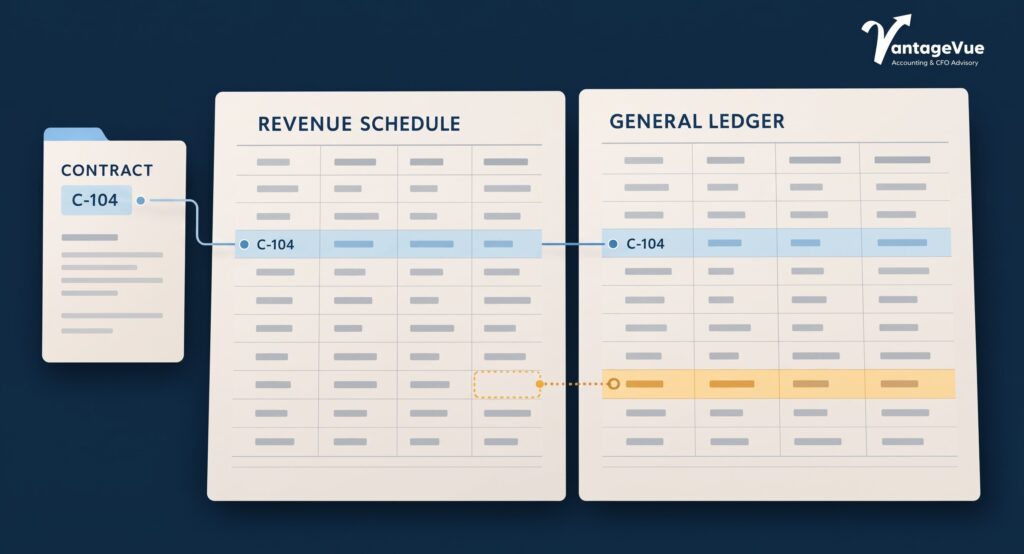
Under the example’s stated assumptions, the accounting trail at the end of January should be explainable as follows:
| Checkpoint | Expected amount | What finance verifies |
|---|---|---|
| January invoice | $24,000 | Customer, contract, service dates, and invoice status agree with the signed terms. |
| January revenue | $2,000 | The schedule reflects one month of the agreed service. |
| Deferred revenue on January 31 | $22,000 | The unrecognized balance reflects the remaining 11 months. |
The $22,000 is the illustrative ending balance for this contract, before other contracts or adjustments. It is not the company’s entire deferred revenue balance. The accounting entries and presentation should follow the company’s policy and the applicable reporting framework.
Now suppose the contract schedule shows $22,000 remaining, but the ledger shows $20,000. Finance should not plug the $2,000 difference into a miscellaneous account. Follow the posting references. Perhaps an automated January entry recognized $2,000 and a manual journal recognized the same month again. If the duplicate posting is confirmed, reverse the unsupported entry through the normal review process, then confirm that January revenue and the ending liability agree.
Another difference may have the opposite cause. The ledger still shows $24,000 deferred because the January revenue entry never posted. In that case, review the failed interface or unposted batch before recording a manual adjustment. Otherwise, a later system retry could create a duplicate.
Reconcile the Movements, Not Just the Ending Number
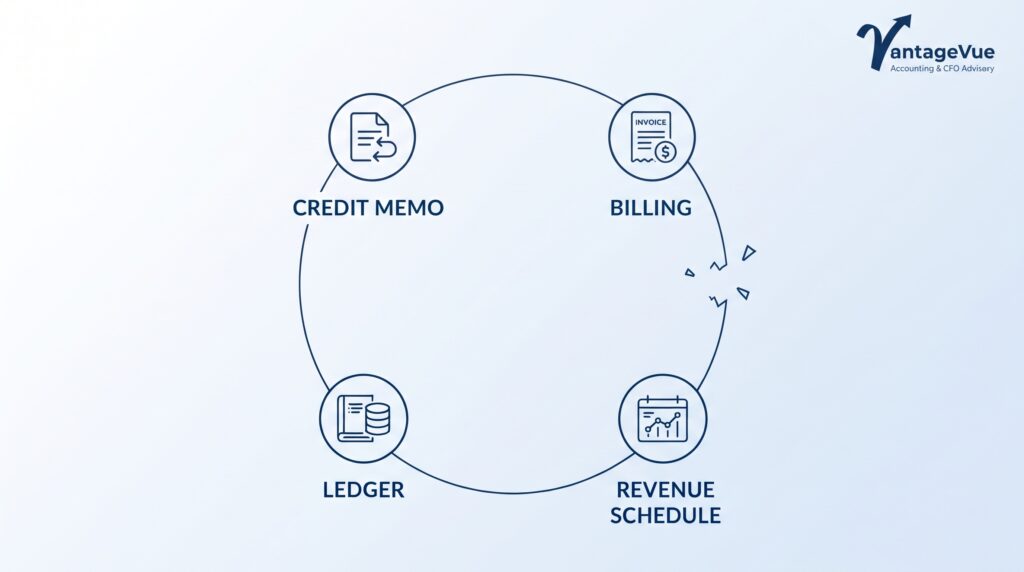
An ending balance can be agreed by coincidence while individual contracts are wrong. SaaS deferred revenue reconciliation should show how the opening liability changed:
Opening deferred revenue + new amounts deferred − revenue recognized ± approved credits and other adjustments = ending deferred revenue.
Tie the billing or subledger schedule to the relevant general-ledger accounts using contract-level detail. Investigate unmatched items by transaction ID, service period, amount, and posting date. Keep the source document and explanation with each resolved item.
Pay particular attention to changes after the original invoice:
- Credits and refunds: Was the credit or refund linked to the correct contract, with its effect reflected in the schedule and ledger under the approved accounting treatment?
- Upgrades or added users: Did the amended terms change the price or service period, and was the accounting assessment updated?
- Early renewals: Were the new term and remaining obligations identified, with any contract modification assessed before updating the schedule and ledger?
- Cancellations: Did billing, the schedule, and the ledger all reflect the approved effective date and terms?
These events can require accounting judgment. A reconciliation identifies the difference; it does not, by itself, determine the correct treatment of a modified contract.
Give Every Difference an Owner
The most useful output of SaaS deferred revenue reconciliation is an exception list the team can act on. For each difference, record the contract ID, invoice or journal reference, amount, cause, owner, proposed correction, reviewer, and resolution date. Distinguish a timing item that will clear next month from an error that needs correction now.
Recurring differences often point to a process fault. If service dates are entered differently in sales and billing, improve the handoff. If credits bypass the revenue schedule, change the workflow. If the ledger and schedule use inconsistent account mapping, document and test the mapping. VantageVue’s guide to data hygiene and close checklists covers the wider discipline behind reliable finance data.
Assign a reviewer who can see both the contract evidence and the posting trail. The review should answer: Does the ending balance tie? Are material reconciling items explained? Have corrections been approved and posted? Will the same error recur next month?
Make the Balance Explainable
Reliable SaaS deferred revenue reconciliation lets finance select a customer agreement and show how its terms became an invoice, how the remaining service was scheduled, and how each month reached the ledger.
That trace makes close issues easier to fix and gives leadership more confidence in reported revenue. It also shows where the handoff between sales, billing, and accounting needs clearer ownership.
VantageVue helps growing businesses connect customer agreements, billing records, revenue schedules, and ledger activity through stronger accounting processes and financial close procedures. Our finance and accounting team can help identify the source of recurring differences and put a review process in place as contract volume grows.
To discuss how VantageVue can help make your SaaS billing and deferred revenue balances more reliable, visit our Finance and Accounting Outsourcing services or contact us: