
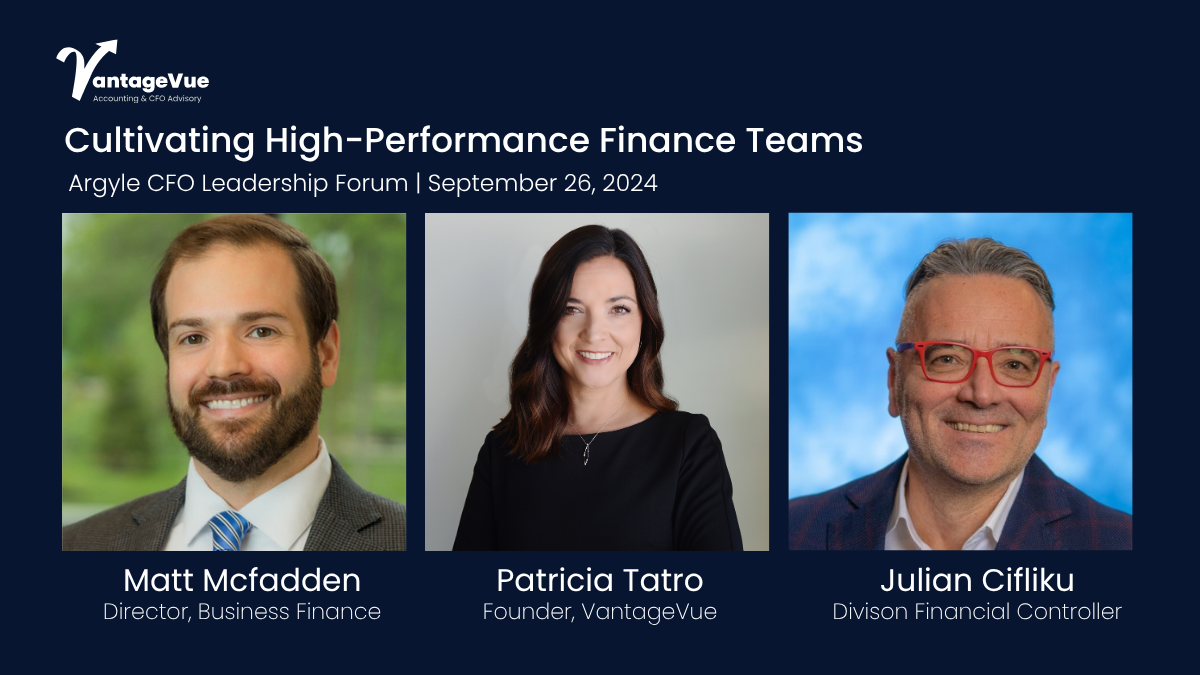
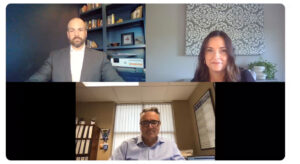
At the virtual Argyle CFO Leadership Forum on September 26, 2024, Patricia Wilson Tatro, CPA, Founder & Fractional CFO at VantageVue, moderated a panel on building durable finance teams. The discussion centered on hiring for mindset, creating inclusive cultures that retain talent through tough cycles, and developing analysts into leaders without losing execution velocity.
Hire for attitude; teach the skills
Panelists agreed that a strong team starts with knowing what kind of person you want to hire. You should look for people who’re curious take ownership and can solve problems. You should test for these things when you interview them. It is not about knowing how to use tools but also about being able to explain numbers to different people.
Patricia underscored tailoring interview prompts to surface how candidates approach uncertainty: “Tell me about a time something went wrong, how did you work through it?” Answers reveal whether a person goes through problems (collaborating, iterating, documenting assumptions) or tries to go around them.
Efficient, values-aligned recruiting
A good way to hire people is to have an idea of what your team is about and what you need. You should have a questions that help you understand how someone thinks and makes decisions.
The group highlighted two simple signals of long-term fit:
- Candidates who can storytell with data, translating analysis into business actions for operators.
- Candidates who volunteer examples of learning from mistakes, not just successes.
Inclusion you can feel
A good team culture is not something you talk about it is something you live every day. Leaders should listen to their team members. Give them the freedom to make decisions. When team members can present their work to leaders they feel more confident and accountable.
“Listen to understand, not to react.”
The panel also stressed trust-building through normalized, non-punitive reviews of missteps. Treating errors as learning moments keeps momentum high and encourages smart risk-taking.
Measure culture where it counts
You can measure your team culture by looking at how people stick during tough times. A strong team gets closer when things are hard. A weak team falls apart. Leaders should watch out for team members who used to be very involved but are now quiet. This can be a sign that something’s wrong and you should talk to them about it.
Developing analysts into managers
The most challenging leap in many finance organizations is senior analyst → manager. New managers must shift from personally producing answers to coaching others to produce them, resisting the urge to “just fix it.” Practical tactics include:
- Pairing stretch projects with structured check-ins that focus on how the work is being done, not just the output.
- Running dry-run presentations so emerging leaders can refine the narrative before executive reviews.
- Documenting “what we learned” after major pushes, so growth is visible and portable across the team.
Patricia noted that giving rising talent real ownership and air time, plus steady feedback, accelerates readiness without sacrificing quality.
Practical leadership habits that compound
The conversation returned repeatedly to leadership habits that are simple but powerful when practiced consistently:
- High-touch communication: frequent, short check-ins are better than infrequent, formal reviews.
- Visible appreciation: a timely “thank you,” especially after weekend or month-end effort, matters.
- Shared context: invite team members into strategy discussions and cross-functional meetings so decisions are not a “black box.”
- Modeling values: teams quickly detect gaps between stated values and observed behavior; authenticity earns followership.

Why this matters now
Hiring markets remain competitive, automation is changing task portfolios, and macro volatility demands faster scenario cycles. Finance teams that hire for mindset, operate with inclusion and trust, and grow talent internally are better positioned to partner with the business, translating analysis into action while retaining knowledge through change.
Key takeaways
- Hire for curiosity, ownership, and problem-solving; teach the tools later.
- Test mindset and storytelling in interviews—not just technical skills.
- Build inclusion with real access; push decision rights down and let people present.
- Track culture under stress (retention, engagement); intervene when high performers go quiet.
- Coach the analyst-to-manager leap; normalize mistakes as learning.
Argyle CFO Leadership Forum — “Cultivating the Best Finance Team for Long-Term Success,” September 26, 2024 (virtual).
For more details Click Here or link below to watch the video.