

The CFO’s Guide to Turning Financial Reports Into Better Business Decisions
As businesses grow, the finance function has to grow with them.
In the early stages, basic bookkeeping and tax-ready financials may be enough. Bills are paid, invoices are sent, payroll is processed, and financial statements are prepared. But as revenue grows, teams expand, customers increase, and decisions become more complex, the business needs more than historical reporting.
It needs a finance function that helps leadership understand what is happening, why it is happening, and what decisions need attention next.
A scalable finance function creates structure, visibility, and financial discipline. It connects accounting, reporting, forecasting, cash flow management, KPIs, and CFO-level insight so business owners can make stronger decisions with more confidence.
For founder-led companies and growing businesses, finance should not remain a back-office process that only looks backward. It should become a practical decision-support system that helps the business plan, adapt, and grow.
Start With Accurate, Timely Financial Reporting
Every scalable finance function begins with reliable financial reporting.
If the books are not accurate, leadership cannot trust the numbers. If reports are delayed, decisions become reactive. If accounts are inconsistent, trends become difficult to understand.
Clean reporting helps leaders see revenue, expenses, profit, cash flow, margins, liabilities, and working capital more clearly. It also reduces confusion around performance, tax planning, financing, investor discussions, and operational changes.
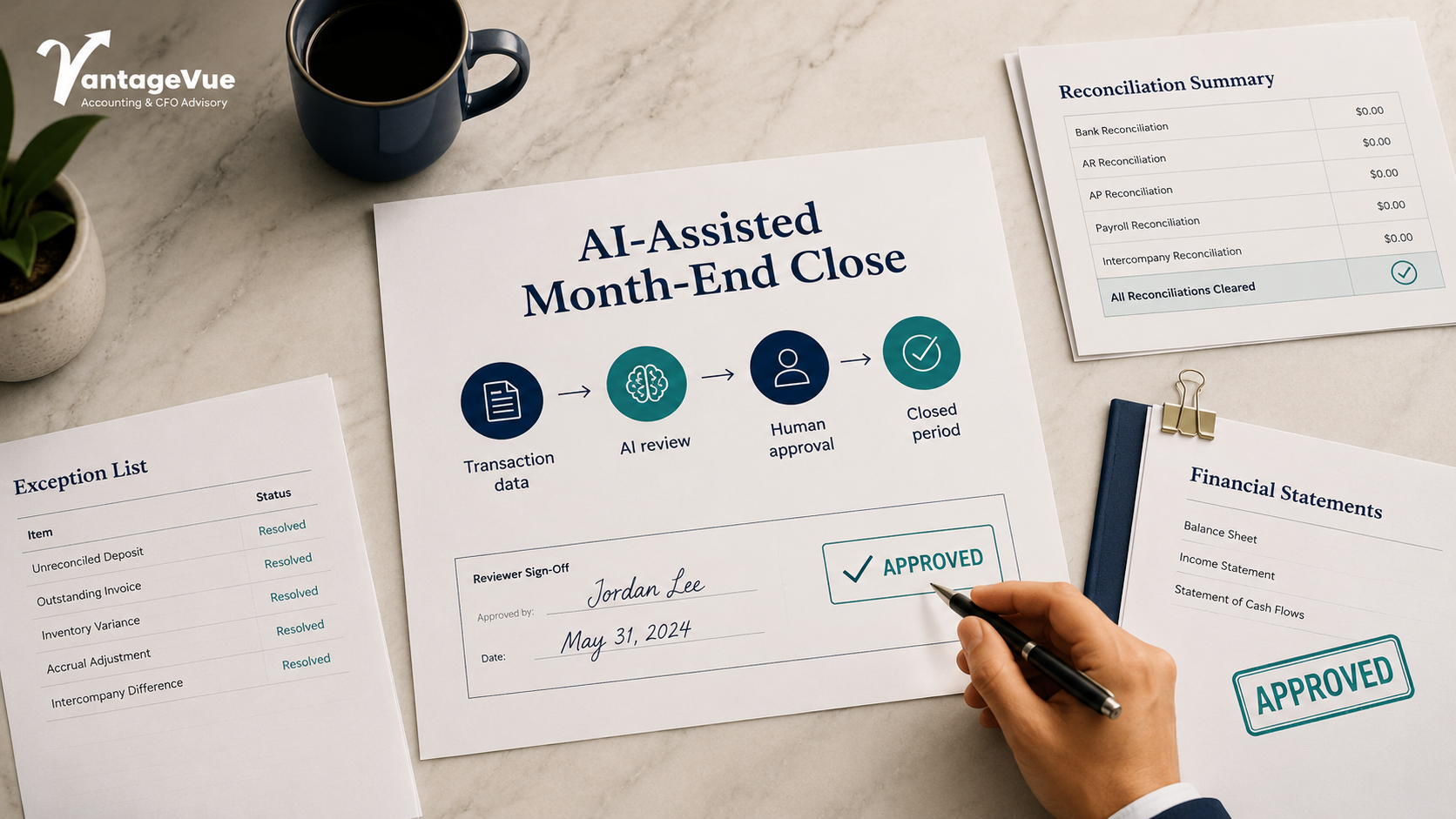
Accuracy alone is not enough. A business also needs a consistent reporting cadence. Monthly financial statements should be completed on time. The close process should be defined. Adjustments should be documented. Reports should be reviewed, not just filed away.
When reporting is accurate and timely, leadership can move from guessing to managing.
Move From “What Happened” to “Why It Happened”
Many businesses receive financial statements, but not enough interpretation.
A profit and loss statement may show that revenue increased. But did gross margin improve or decline? Did revenue growth come from stronger pricing, more customers, larger projects, or one-time activity? Did expenses increase because of planned investment, inefficiency, hiring, vendor costs, or operational pressure?
A balance sheet may show cash on hand. But is that cash available for growth, or is it already committed to payroll, taxes, debt service, inventory, or upcoming vendor payments?
Financial reports become more valuable when they explain the story behind the numbers.
This is where CFO-level review matters. The finance function should help identify patterns, risks, and decision points. It should explain margin movement, cost trends, cash pressure, customer concentration, revenue quality, and changes in working capital.
The goal is not just to know whether the business made money. The goal is to understand what is driving performance and what leadership should do next.
Build Finance Processes Before Growth Adds Complexity
As a business grows, weak finance processes become more expensive.
In the beginning, a company may manage invoicing, collections, approvals, payroll, and reporting through informal habits. That may work when the team is small and transaction volume is low. But as the company expands, informal processes start to create gaps.
Invoices may go out late. Collections may become inconsistent. Expenses may be approved without enough visibility. Payroll timing may strain cash flow. Month-end close may take too long. Leadership may not see financial issues until after they have already affected the business.
A scalable finance function creates a process before the business becomes too complex. This includes clear billing procedures, approval workflows, close timelines, cash flow planning, documentation standards, and accountability around key financial activities.
Strong processes do not slow the business down. They reduce confusion, prevent avoidable errors, and make growth easier to manage.

Create KPIs That Match the Business Model
Not every business needs the same financial dashboard.
A scalable finance function should measure the drivers that actually matter for the company’s model. Generic reporting can show overall performance, but business-specific KPIs help leadership understand what is improving, what is weakening, and where action is needed.
For a professional services firm, important metrics may include project profitability, utilization, billing rates, capacity, and client profitability. For a staffing company, leadership may need visibility into gross margin, recruiter productivity, payroll timing, billing cycles, fill rates, and customer concentration. For a manufacturing or distribution business, the focus may be inventory, standard costs, landed costs, gross margin by product, purchasing trends, and working capital.
For a growing founder-led company, the right KPIs may include cash runway, revenue quality, recurring revenue, customer acquisition costs, operating leverage, and margin by service line.
The point is not to create a large dashboard filled with numbers. The point is to identify the few metrics that help leadership make better decisions.
A good finance function helps the business see not only whether it is growing, but whether that growth is profitable, sustainable, and operationally manageable.
Use Forecasting as a Management Tool
Forecasting should not be treated as an annual exercise that sits in a spreadsheet until the next budget cycle.
For a growing business, forecasting is a management tool. It helps leadership understand what may happen under different scenarios and what decisions should be made before cash, capacity, or margin becomes strained.
A strong forecast can support hiring decisions, pricing changes, financing needs, expansion plans, capital investments, and cost controls. It can also help leadership prepare for slower collections, seasonal revenue, large customer changes, inventory purchases, or payroll growth.
The most useful forecasts are practical, updated regularly, and connected to how the business actually operates.
A good forecast should help answer: Can we afford to hire? What happens if revenue grows but margins decline? How much cash do we need over the next few months? What happens if a major customer delays payment? Which investments can we support without creating unnecessary risk?
When forecasting is used properly, it helps leadership move from reactive decision-making to proactive planning.
Strengthen Cash Flow Visibility
Many profitable businesses still experience cash pressure.
This happens because profit and cash are not the same thing. A company may be profitable on paper but still struggle with delayed collections, upfront costs, inventory purchases, debt payments, tax obligations, payroll timing, or growth-related spending.
A scalable finance function gives leadership better visibility into cash movement. It helps leaders understand when cash is coming in, when cash is going out, what commitments are ahead, and where shortfalls may appear.
Cash flow visibility is especially important during growth. Growth often requires investment before the financial return is fully realized. The company may need to hire, purchase inventory, improve systems, expand capacity, or support larger customers before cash catches up.
Without cash planning, growth can create pressure instead of stability.
A strong finance function helps leadership understand not only whether the company is profitable, but whether the company has the cash structure to support its plans.
Add CFO-Level Insight as the Business Scales
At a certain point, financial reporting alone is not enough.
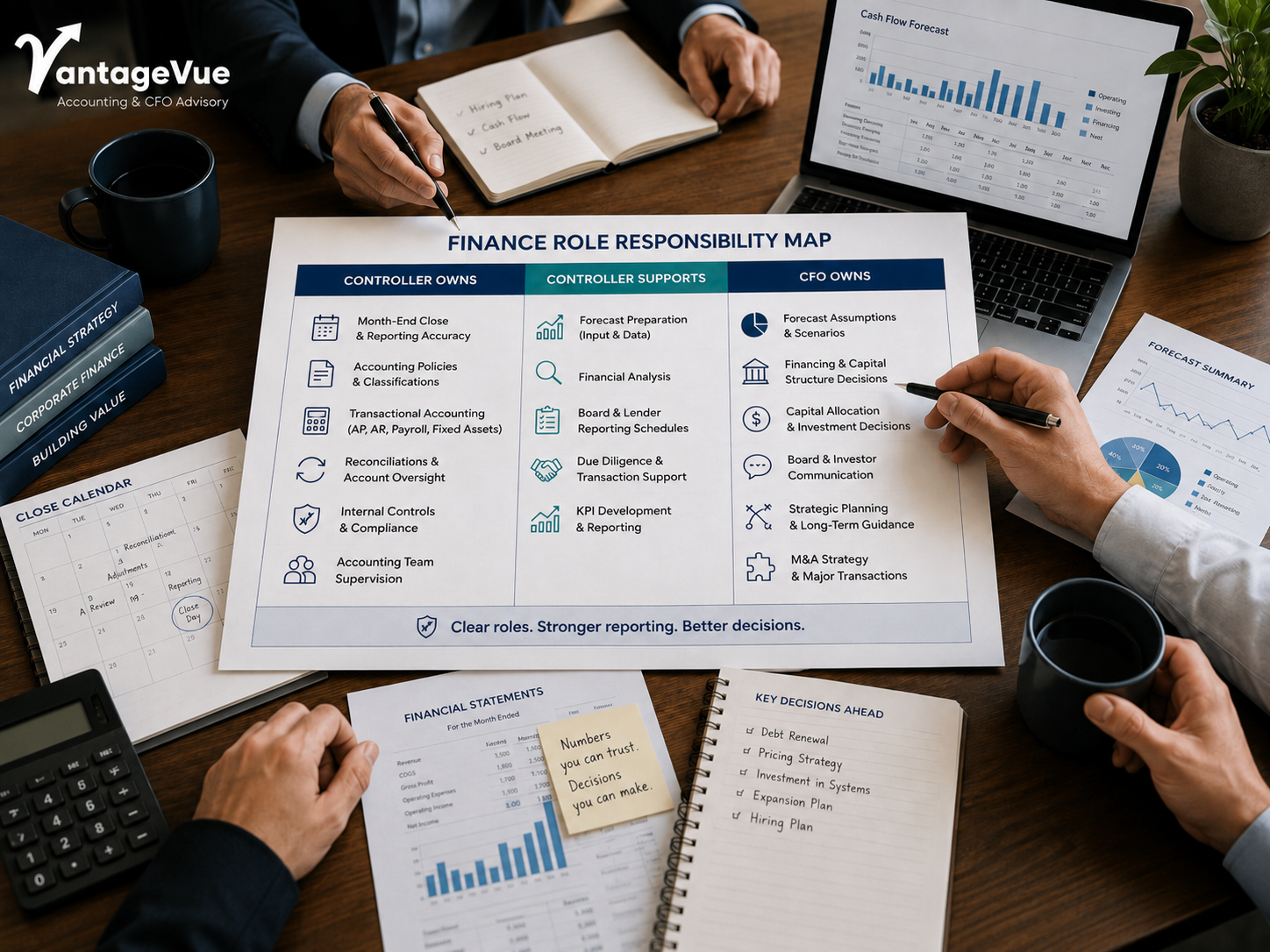
Leadership needs interpretation. They need someone to connect the numbers to the business model, operating plan, and decisions ahead. This is where CFO-level support becomes valuable.
A CFO perspective helps the business move beyond bookkeeping and compliance. It brings financial strategy into everyday leadership decisions.
This may include margin analysis, pricing support, cash flow planning, scenario modeling, board or investor reporting, financing preparation, operational reporting, acquisition readiness, or department-level accountability.
For many growing companies, a full-time CFO may not be necessary yet. But the need for CFO-level insight often arrives before the company is ready to hire a permanent executive. In those cases, fractional CFO support can add senior financial guidance in a flexible, practical way.
Technology Matters, But Process Comes First
Finance technology can improve efficiency, reporting, and visibility. Accounting platforms, dashboards, automation tools, payroll systems, billing software, and reporting solutions can all support a stronger finance function.
But technology is not a substitute for process.
If the chart of accounts is messy, workflows are unclear, data is inconsistent, or reporting responsibilities are undefined, technology will not fix the underlying issue. It may simply make poor data move faster.
Before adding more tools, businesses should clarify the finance process. What needs to be tracked? Who owns each step? What reports are needed? How often should they be reviewed? Which metrics matter? What decisions should the system support?
The best finance systems are not always the most complicated. They are the systems that match the business model, improve visibility, reduce manual work, and help leadership make better decisions.
Build for the Next Stage, Not Just the Current Stage
A scalable finance function should support the business today while preparing for what comes next.
That does not mean overbuilding. A growing company does not need the same finance infrastructure as a large enterprise. But it does need enough structure to avoid preventable issues as complexity increases.
The right finance function should help the business answer today’s questions while preparing for tomorrow’s decisions. Can the company support more customers? Can margins hold as the team grows? Are systems ready for more transaction volume? Is cash flow strong enough for expansion? Are reports reliable enough for lenders, investors, or potential acquirers?
A finance function that scales gives leadership the confidence to make decisions with better information. It reduces surprises, improves accountability, and creates a stronger foundation for sustainable growth.

Final Thoughts
Building a scalable finance function is not about adding unnecessary complexity. It is about creating the right level of structure, visibility, and financial insight for the stage of the business.
The strongest finance functions do more than close the books. They help leadership understand performance, protect cash, manage growth, improve margins, and make better decisions.
For growing businesses, financial reports should not sit in a folder after month-end. They should become a tool for action.
At VantageVue, we help businesses strengthen their finance function through clearer reporting, practical forecasting, cash flow visibility, KPI development, and CFO-level advisory support. Our goal is to help leadership teams move beyond historical reporting and use financial insight to support smarter, more confident business decisions.
To discuss how a stronger finance function can support your next stage of growth, contact VantageVue Advisory at info@VantageVueAdvisory.com or (612) 200-2651.